Over the last three days, I experienced church in three very different ways.
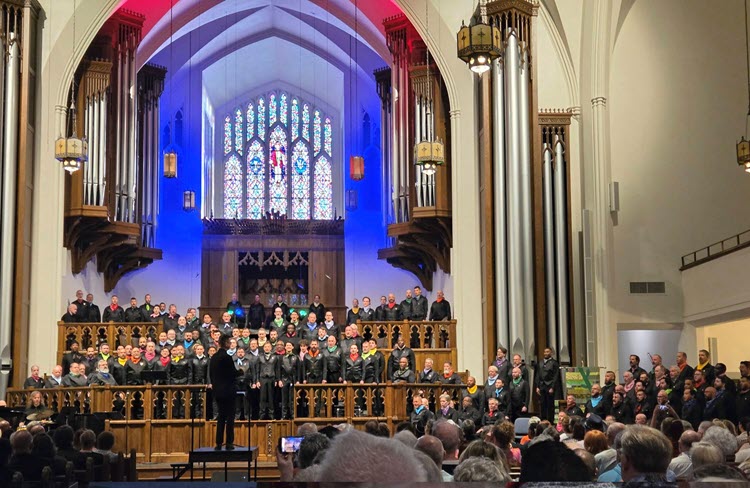
Friday: I celebrated Pride Month at Broadway Baptist Church in Fort Worth, Texas, attending the final Pride as Big as Texas concert presented by the Turtle Creek Chorale. The evening transformed the historic sanctuary into a space of music, story-telling, and celebration. It also served as the unofficial kickoff to Trinity Pride weekend.
Saturday: I joined a number of clergy colleagues and the congregation of St. Paul’s United Church of Christ in Gerald, Texas, for the ordination of Jeff Richter. The service was especially meaningful because Jeff has faithfully served this congregation for a decade, and because we now serve together on the Board of the South Central Conference of the United Church of Christ.
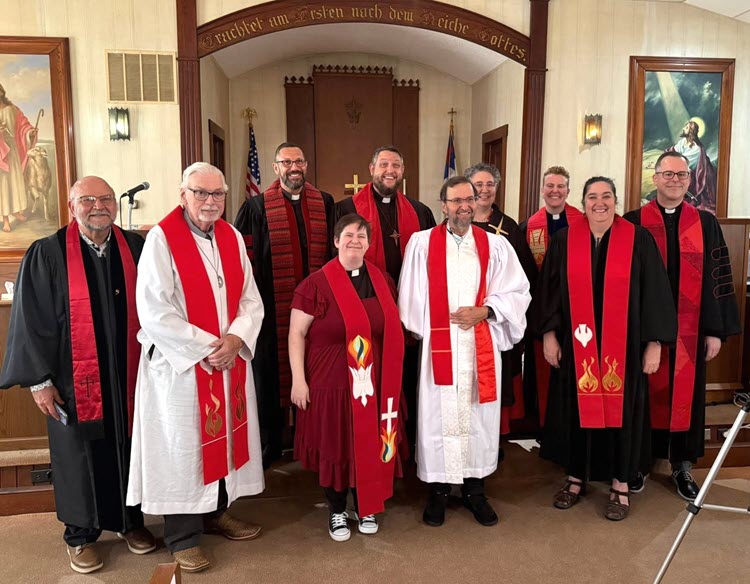
(Rev. Richter is standing in the center of the group in a white robe)
Sunday: I returned to First Christian Church (Disciples of Christ) in Fort Worth, where I serve as Interim Minister, to lead weekly worship. As part of our Becoming a Fruitful Church series, we explored the theme of extravagant generosity and what it means to faithfully steward the gifts God has entrusted to us.
So What?
These three experiences could not have been more different.
Denomination: I began at a Baptist church affiliated with the Cooperative Baptist Fellowship, continued at a congregation affiliated with the United Church of Christ, and concluded at one affiliated with the Christian Church (Disciples of Christ).
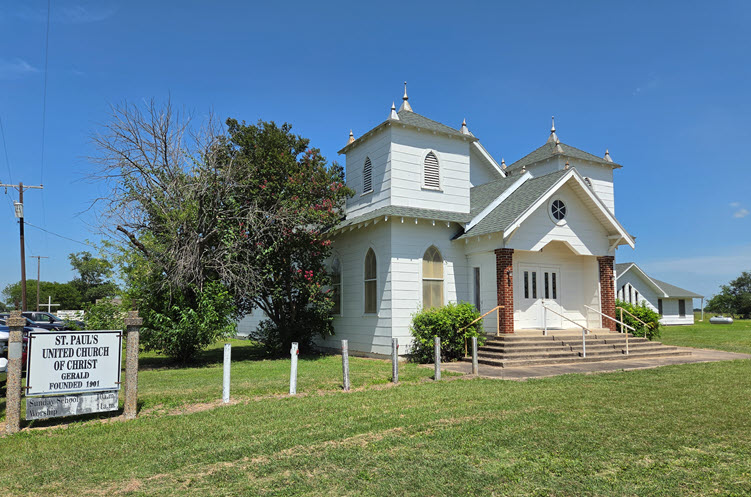
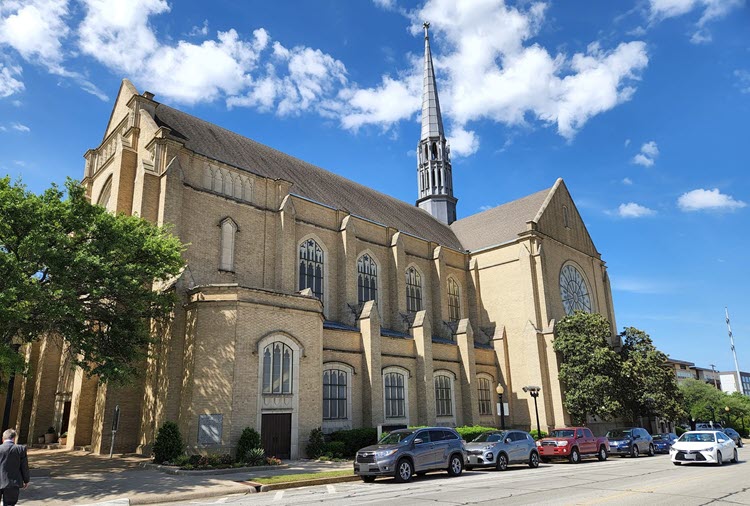
Location: While Broadway Baptist and First Christian are located less than a mile apart, they inhabit very different contexts. Broadway sits just south of downtown in the vibrant, rapidly developing, and highly walkable Near Southside neighborhood. First Christian stands in the heart of downtown, surrounded by skyscrapers. In contrast, St. Paul’s is a rural congregation located northeast of Waco.
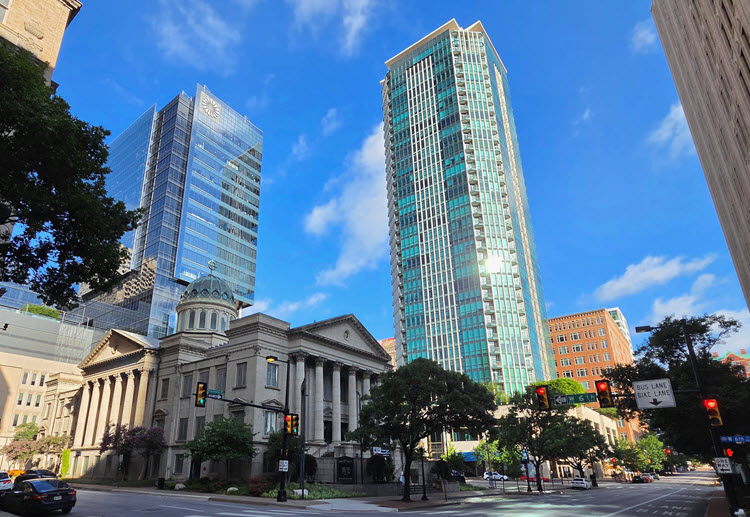
Size: St. Paul’s sanctuary seats around 100 people compared to 625 at First Christian and 1,200 at Broadway.
Purpose. One gathering centered on music and celebration, another on the ordination of a pastor, and the third on the ordinary yet sacred rhythm of weekly worship.
Despite their many differences, all three experiences were deeply meaningful. Together, they reminded me that the church is far bigger than any one expression, congregation, or denomination. Each community, in its own way, demonstrated a commitment to radical welcome especially of LGBTQ+ people, people with disabilities, and children and youth.
After three days in three very different churches, I find myself hopeful about the future of the church. The body of Christ is diverse, and that diversity is not a weakness to overcome but a gift to celebrate.