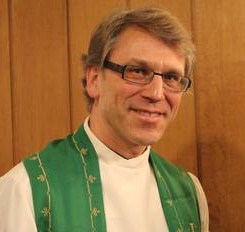
January 18-25 was the Week of Prayer for Christian Unity. This annual event utilized resources sponsored jointly by the World Council of Churches (WCC) and the Pontifical Council for the Promotion of Christian Unity of the Roman Catholic Church. This year's theme was selected by a group of Christian leaders from Jerusalem and is based on Acts 2:42: “One in the apostles’ teaching, fellowship, breaking of bread and prayer. ” The Rev. Dr. Olav Fykse Tveit, General Read More …
Discipleship
The Future of Global Missions: 9 Trends (#0251)
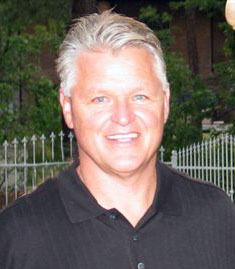
Eric Swanson is Leadership Community Director for Externally Focused Churches and co-director of the Missional Renaissance Leadership Community for Leadership Network, which seeks to accelerate the impact of leaders by focusing on three big ideas: connecting, innovating, and multiplying. Previously he served with Campus Crusade for Christ for twenty-five years. Swanson has co-authored several books including To Transform a City: Whole Church, Whole Gospel, Whole City (2010) and Read More …
Let us Commit to Being the New Church (#0249)

In the Fall/Winter 2010 edition of the "New Times Newsletter," a periodical associated with the Center for Progressive Renewal, Amanda Hendler-Vost, co-pastor of Land of the Sky United Church of Christ shared the story of the birth this congregation. During their first official worship service on Pentecost Sunday, 2009, co-pastor Sara Wilcox (pictured at right), included these words in her sermon: Let us commit to more than singing a new church into creation. Let us commit to being Read More …
What Does it Mean to Live as a Follower of Jesus? (#0247)
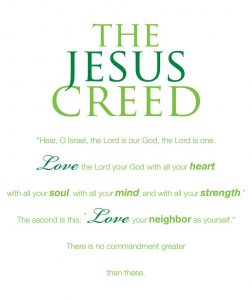
What does it mean to live as a follower of Jesus? The profoundly simple yet incredibly challenging answer is found in this creative two minute video. So What? Director, animator and compositor Dan Stevers created this video for Journey Community Church to help publicize an upcoming event featuring Scot McKnight. If you don't know anything about Scot McKnight beyond what you just watched, I encourage you take the time to learn more. You can read his award winning blog, Read More …
The Acceptable Year of the Lord – Rev. Dr. Martin Luther King, Jr. (#0245)
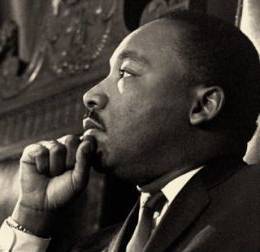
Today our nation observes Martin Luther King Jr. Day. While many people know about The Rev. Dr. Martin Luther King, Jr., far fewer are familiar with any of his sermons beyond "I Have a Dream." I invite you to take a few minutes to read two excerpts from Dr. King's sermon entitled "Guidelines for a Constructive Church," which he preached at Ebenezer Baptist Church in Atlanta on June 5, 1966. This morning I would like to submit to you that we who are followers of Jesus Christ, and Read More …
Contemporvant Worship: Too Close To Reality? (#0242)
A generation ago many congregations began adding "contemporary" worship services. While any style of worship can be done well and in ways that clearly glorify God, any style is also capable of falling well short of those standards. The following video about "contemporvant" (a made up word created by blending contemporary and relevant) worship illustrates what can happen when contemporary worship loses its way. So What? According to multiple sources, this video was produced by Read More …
Serving God or Serving the Church? (#0239)
Donald Miller is the author of several books including A Million Miles in a Thousand Years: What I Learned While Editing my Life (2009) and Blue Like Jazz: Nonreligious Thoughts on Christian Spirituality (2003). To connect with him, read his blog, like him on Facebook, or follow him on Twitter. This past week, he posted, "Is Church Life Stifling Your Creativity?," which concludes with these words: Here’s the point of this blog post: There is a difference between what “the church” Read More …
Studying the Beatitudes in Real Time (#0238)

A few days ago, I blogged about my ongoing quest to learn more about Jesus. In that post I suggested that 2011 may be a year I devote considerable time to examining Jesus' preaching via the Sermon on the Mount. Since that time, I learned of a unique opportunity to study the Beatitudes, which lead off Matthew's account of the Sermon on the Mount (Matthew 5:3-12). Kimberly Knight, Circuit Rider and web admin for the Beatitudes Society, recently blogged about a new interactive live Read More …
A Year With the Sermon on the Mount (#0236)
For the last few years, I have been studying the life and ministry of Jesus in an attempt to more fully answer the question: “Who is Jesus?” A few months ago I wrote series of posts sharing areas of emphasis in my study of Jesus over the last several years: prayers, parables, priorities, and creed. Recently, I read a blog that has led me to ponder the possibility of spending some time focusing on preaching. That blog, "A Year With the Sermon on the Mount," encourages Read More …
Atheist Billboards and Christian Responses (#0233)
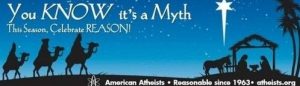
Billboards are big business. According to the Outdoor Advertising Association of America, they produced $4.4 billion dollars of advertising revenue in 2008. While religious billboards account for an insignificant portion of the market, they often generate publicity that extends to an audience far greater than those who drive by and personally view the sign. Take for example two recent billboards paid for by the American Atheists: This billboard ad (pictured above) appeared in Read More …