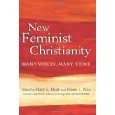
Mary E. Hunt and Diann L. Neu, eds. New Feminist Christianity: Many Voices, Many Views. Skylight Paths, 2010. ISBN: 9781594732850.
Meet the Editors and Authors
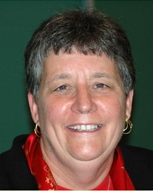
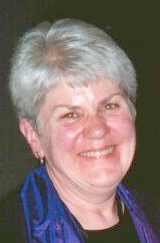 Mary E. Hunt (pictured on the left) and Diann L. Neu (pictured on the right) are co-founders and currently serve as co-directors of WATER (Women’s Alliance for Theology, Ethics and Ritual), which is an an international community of justice-seeking people who promote the use of feminist values to make religious and social change. Together they edited this volume, wrote its introduction and conclusion, and provided short introductions to each of its five sections . Individually, each woman contributed a chapter.
Hunt is a Catholic feminist theologian who is active in the women-church movement. She has taught at Georgetown University, Iliff School of Theology, Pacific School of Religion, and Lancaster Theological Seminary. Hunt spent one academic year at Harvard Divinity School as a Research Fellow at the Center for the Study of Values in Public Life. She is the author of Fierce Tenderness: A Feminist Theology of Friendship and editor of A Guide for Women in Religion: Making Your Way from A to Z.
Neu is a feminist liturgist and minister, spiritual director, and psychotherapist . She has taught at Lancaster Theological Seminary, Tai Sophia Institute, and Global Ministries University. Neu has written several books including Women’s Rites: Feminist Liturgies for Life’s Journey and Return Blessings: Ecofeminist Liturgies Renewing the Earth.
Book Basics
New Feminist Christianity is an anthology of third wave American Christian feminism featuring twenty-eight chapters each penned by a different contributor in keeping with the book’s subtitle (Many Voices, Many Views). Contributors include women who are scholars teaching in the academy, ministers serving in churches, activists running centers, and administrators working in their denominations. The book is divided into five thematic parts:
- Feminist Theological Visions
- Feminist Scriptural Insights
- Feminist Ethical Agendas
- Feminist Liturgical and Artistic Frontiers
- Feminist Ministerial Challenge
The essays range in length from seven to sixteen pages and allow each author to share part of her story as well as her hopes for the future of Christian feminism. For those not familiar with such a diverse group of writers, the editors include brief biographical sketches of each contributor.
So What?
Christian feminism has changed considerably over the last forty years. Some of the well known contributors’ (including Rosemary Radford Reuther and Elisabeth Schüssler Fiorenza) experiences span those years while others write of what they have known in their years of experience. This book offers a unique opportunity for readers to gain an appreciation of those changes, better understand the current landscape, and ponder future possibilities.
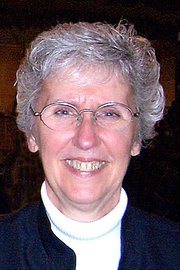 Barbara Brown Zikmund is an ordained United Church of Christ minister who spent over thirty years in administration and teaching in theological schools: Chicago Theological Seminary, Pacific School of Religion, and Hartford Seminary, where she served as president. In her chapter, “Women in Ministry in a Postfeminist Era,” she suggests three things that she understands to be shaping the future of Christian feminism:
- During the past fifty years definitions of ministry and the meaning of ordination have changed, precisely because of the increasing numbers of women in church leadership.
- The language of “feminism” is fading, but feminist values have infiltrated our society and are supported by most women and men.
- Formal leadership patterns in the institutional church (from the magisterium of the Roman Catholicism to the celebrity clergy of megachurches) are less and less important to religious people in American society. New forms of church are emerging (p. 236-7).
These issues will be critical in coming years and may lead to a day when “in postfeminist Christianity there may not be any ordination. What is called ordination will affirm the ministry of all Christians, healing the artificial chasm between clergy and laity” (p.244).
How has feminism influenced your understanding of the Christian faith?
What is your response to Zikmund’s suggestion that there may be a time when ordination as we now understand it ceases?