The Universal Fellowship of Metropolitan Community Churches is the largest Protestant denomination birthed in and primarily serving the LGBTQ+ community.
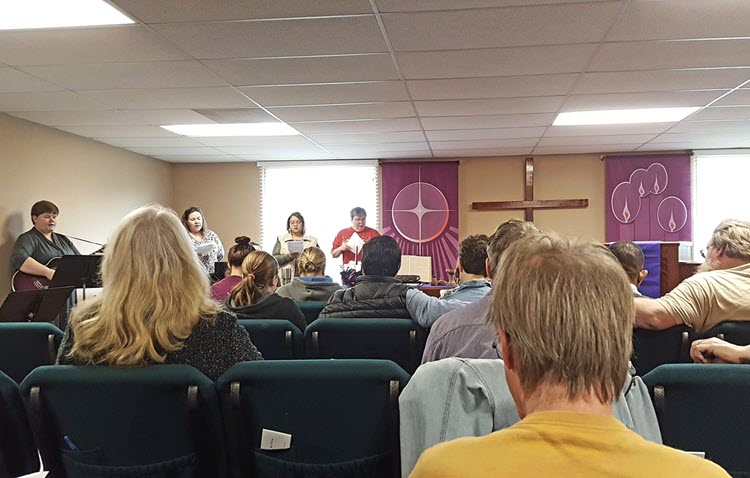
G. Samantha Rosenthal’s recent Sojourner’s article has been shared across many of my social media feeds often with significant commentary. Her piece notes the denomination’s historical development since its founding in 1968, including
- becoming the largest gay organization in America in the 1970s
- developing most of its churches in the south then losing more than half of all southern churches since 1995
- declining in the 2000s and 2010s as more Mainline Protestant churches have become open and affirming
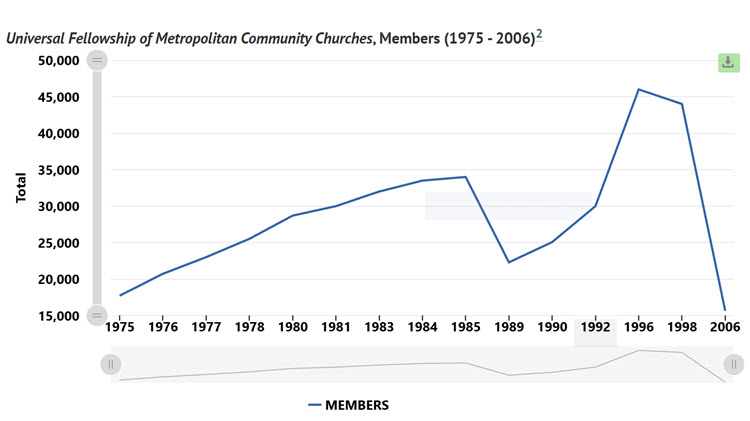
My search for longer term traditional metrics about denominational decline led me to the Association of Religion Data Archives. Their page dedicated to this tradition includes a number of statistical trends, but the data is only updated through 2006. This data shows membership growth occurred from 1975 to 1986 followed by decline for a few years before another period of growth in the 1990s. Radical decline begin in the early 2000s, which included the departure of the denomination’s largest church: Cathedral of Hope. A few years later Cathedral chose to affiliate with the United Church of Christ – a connection that continues to this day.
So What?
Denominational decline is well documented. It came first to Mainline Protestants, but in recent decades has expanded to Evangelical Protestants and beyond. While the MCC has always been modest in size, it is not exempt from membership decline.
I have explored this topic at length here on So What Faith, including
- My Religion is Dying: A Deep Dive into Mainline Decline (June 2024) – lincludes inks to 50 prior posts on So What Faith
- Southern Baptist Membership Drops Every Year Since 2006 (July 2025) – data from SBC Annuals
- Slow Fade: A New Look at Mainline Protestant Decline (August 2025) – data from 2024 PRRI Census of American Religion